


Enrichment
Why Do Dogs Dig? A Sensory Enrichment Approach
👤
Author: Darren James
🕐
3 min read
📅
Dogs dig because it serves a purpose for them. It might cool them down, let them reach an interesting smell, burn off excess energy, or feel good. Digging is natural behaviour, so stopping your dog digging altogether is rarely the right goal. The better question is what the digging is giving your dog, and how to offer that in a place you are happy with. This guide is for owners with a dog who digs up the lawn, the borders or the base of the fence. We look at digging through a sensory lens: what your dog is smelling, feeling and working through as they dig.
Digging is a sensory event
To us, a hole in the lawn is damage. To a dog, it is a rich mix of scent, texture and physical effort. Fresh soil holds smells we cannot detect, and the action itself gives steady, repetitive feedback through the paws. That is why sensory enrichment sits at the heart of how we think about digging. Research supports giving dogs more chances to use their noses. In a 2019 study of 20 pet dogs, Charlotte Duranton and Alexandra Horowitz compared two weeks of nosework with two weeks of heelwork. The nosework dogs showed a brighter outlook afterwards. The study didn't look at digging itself, but it does show why scent-led activity matters to a dog's emotional state.
Why is my dog digging? Six common reasons
Where and when your dog digs usually points to the reason. Agria's guidance on digging sets out these common causes, and we have added what each one tends to look like at home.
Instinct
Terriers were bred to hunt small burrowing animals, so digging can be deeply satisfying for them. They may dig with nothing obvious to find. These dogs do best with a permitted outlet rather than a ban.
Boredom or lack of stimulation
Digging often happens when a dog is left outside with little to do. If the holes appear in random places, look at the rest of the day. Does your dog get time to sniff, think and be with you?
Stress or anxiety
Digging can be a displacement activity for a worried dog, especially after a house move, a new baby or longer spells alone. Digging at doors or fence lines deserves a closer look, as it can be an attempt to get away or to reach you.
Hunting for wildlife
They are dogs after all! So if your dog returns to a similar patch, often near a wall or tree, they might just be following little creatures underground. Be careful of poisons and pellets around, notably in urban areas, as these put your dog and local wildlife at risk.
Comfort and shelter
A shallow scrape in the shade is often a dog making a cool place to lie. Good shade, fresh water and a covered spot can remove the need. Better still, bring your dog in rather than leaving them outside for long spells.
Attractive smells in the soil
Compost, blood and bone fertiliser and freshly broken earth can all draw a dog in. If digging starts just after planting, the soil itself may be the appeal.
How to stop a dog digging in the wrong places
Telling a dog off after the fact does not help. Your dog will not connect it to the hole, and the stress may make the problem worse. Instead, work on the need and the location. Here is how to build a digging pit.
- Choose a low raised bed or a child's sandpit in a shaded part of the garden.
- Fill it with play sand or soft, chemical-free soil.
- Bury a favourite toy or a few pieces of your dog's food just below the surface while they watch.
- Encourage them in with a happy voice, and reward them when they dig there.
- Bury new finds regularly, and deeper as your dog gets the idea, so the pit stays worth visiting.
- Block off the areas you want to protect while the new habit forms.
Then look at the rest of the day. Try a slow sniffing walk, a scatter feed in the grass or a quiet find-it game. We frequently see dogs settle more deeply after a calm sniffing experience than after high-energy activity. Our guide Using Daily Feed Strategically as Enrichment shows how to turn meals into this kind of opportunity.
Keep digging safe
Check any patch your dog favours for hazards. Toxic plants such as daffodils, tulips, lilies, azaleas and ivy can cause illness if chewed. Compost heaps can hide mould, fertiliser or slug pellets, and old garden soil can hide glass or rubble. Contact your vet straight away if your dog vomits, drools or behaves oddly after digging.
Obsessive digging needs a different approach. If your dog digs whenever they go outside, can't stop, or has hurt their paws, speak to your vet first. Pain and illness can sit behind changes in behaviour, so it is worth ruling them out.
How we think about digging at Royvon
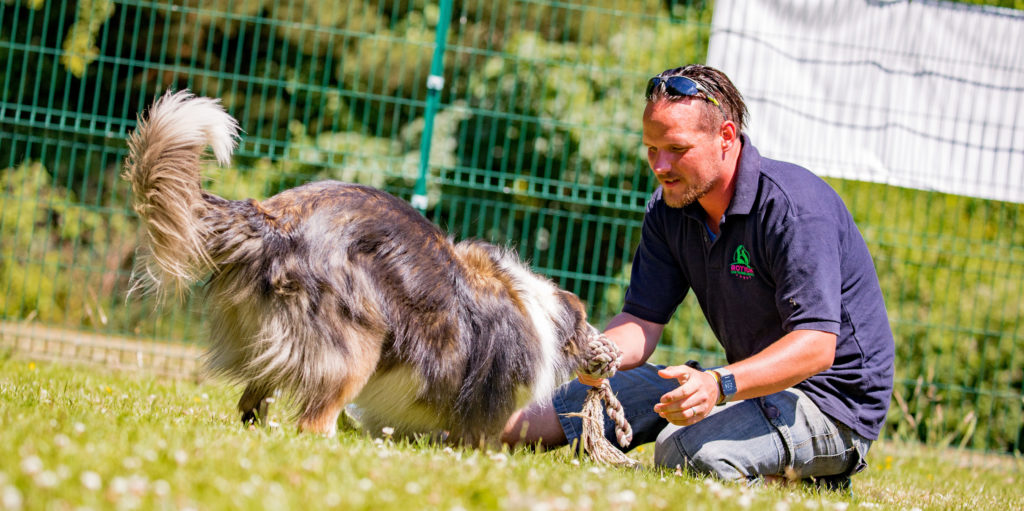
We see digging as useful information, not a fault. Our Enrichment Park includes purpose-designed areas where dogs can search, dig, explore, and relax, which lets our team see what a dog enjoys and, in turn, helps them settle. Some dogs throw themselves in. Others prefer quiet sniffing. Both tell us what that dog finds fulfilling, and that determines the enrichment we offer during residential training or a boarding stay.
Common questions about dogs digging
Why does my dog dig in their bed or on the carpet?
This is usually nesting behaviour. Many dogs scratch at bedding to make it comfortable before lying down. It is usually harmless, but mention it to your vet if it is new, frantic, or paired with restlessness.
Will my dog grow out of digging?
Some do, particularly if the digging came from youthful energy. Dogs with a strong instinct to dig often keep the urge throughout life, so giving them a permitted place to dig tends to work better than waiting.
How do I stop my dog digging under the fence?
Bury mesh or paving along the fence base and supervise garden time. Then consider why your dog wants to leave, as escape digging can come from boredom, worry about being alone, or an interesting scent beyond the fence.
The takeaway
Dogs dig for a reason. Work out what the digging gives your dog, offer it somewhere you are happy with, and make the rest of their day more fulfilling. If digging is part of a wider pattern of stress or restlessness, contact us and we will talk through what could help.
Continue reading: Is Your Dog Lazy, or Under-Stimulated? and Barking as an Unmet Need.
About Royvon
Enrichment Based Dog Boarding
Our calm, structured environment is built for dogs who need more than a standard kennel.
Dog BoardingLeading Dog Training
A structured residential dog training programme where your dog lives with our expert team, building calm behaviour, reliable obedience and real-world confidence that lasts beyond their stay.
Dog Training
Royvon News & Enrichment Advice
Recent Posts Regarding Enrichment

Book With Peace Of Mind Today - Limited Places Available


Specialist care, structured training, and enrichment-led boarding designed to help dogs feel calm, confident and understood. 30,000+ completed residential training programmes; 200,000+ dogs cared for in total, including boarding, since 1959.
Existing Customer?
Log In


© Copyright 2026 Royvon. All Rights Reserved.
Licensed by Merthyr Tydfil County Borough Council with the reference AB 0001. Licensed by Surrey County Council with the reference LN/201800796.
Social Media: