

Dog Behaviour Challenges
Barking as an Unmet Need: A Sensory and Emotional Enrichment Approach
👤
Author: Darren James
🕐
3 min read
📅
2018-01-31
Why dogs bark, and what each type is telling you
Barking, like whining or growling, is a normal form of canine communication. The meaning changes with pitch, duration, frequency and the body language alongside it, and varies by breed, age and individual, puppies tend to bark higher and more often for attention, while some breeds are simply more vocal than others. If barking is a serious ongoing problem, it's worth seeking advice from a qualified behaviourist rather than relying on general tips alone.
Alarm barking
Triggered by a sudden change, a noise outside, an unexpected object, a sudden movement, this is common in breeds bred to guard property, including Border Collies and Shepherds. It tends to be loud, intermittent, with pauses for listening, and can sound panicked (higher pitch) or assertive (lower pitch). Blocking the dog's view of the trigger helps, along with learning to recognise typical triggers (the postman, a neighbour's child walking home) and rewarding calmly the moment the dog notices the trigger, before they bark.
Barking to deter an intruder
This is a threatening display aimed at making a perceived intruder move away, seen across many breeds including German Shepherds, terriers, Dachshunds, Chihuahuas, Spitzes and Bichons. It continues until the dog feels safe or resorts to another coping strategy. This barking comes from fear or nervousness rather than naughtiness, so the fix is changing how the dog feels about the trigger, not simply suppressing the bark, using distraction, food or professional support as needed.
Barking at moving objects
Common in herding breeds who seem wired to manage movement and order, this usually means a few barks and maybe a short chase at cars, bikes, or other dogs. Teaching a happy recall cue and rewarding generously for disengaging works well, alongside structured desensitisation: lead on, clicker in hand, click and treat each time the dog notices the object calmly, gradually increasing duration and closing distance over several sessions.
Barking for attention
Seen often in terriers, Beagles and Belgian Shepherds, this covers wanting a toilet break, dinner, attention, or excitement before a walk or ball throw. Teaching an alternative behaviour, sit before the lead goes on, a bell to ring for the door, alongside impulse control games, redirects this into something manageable.
Play barking
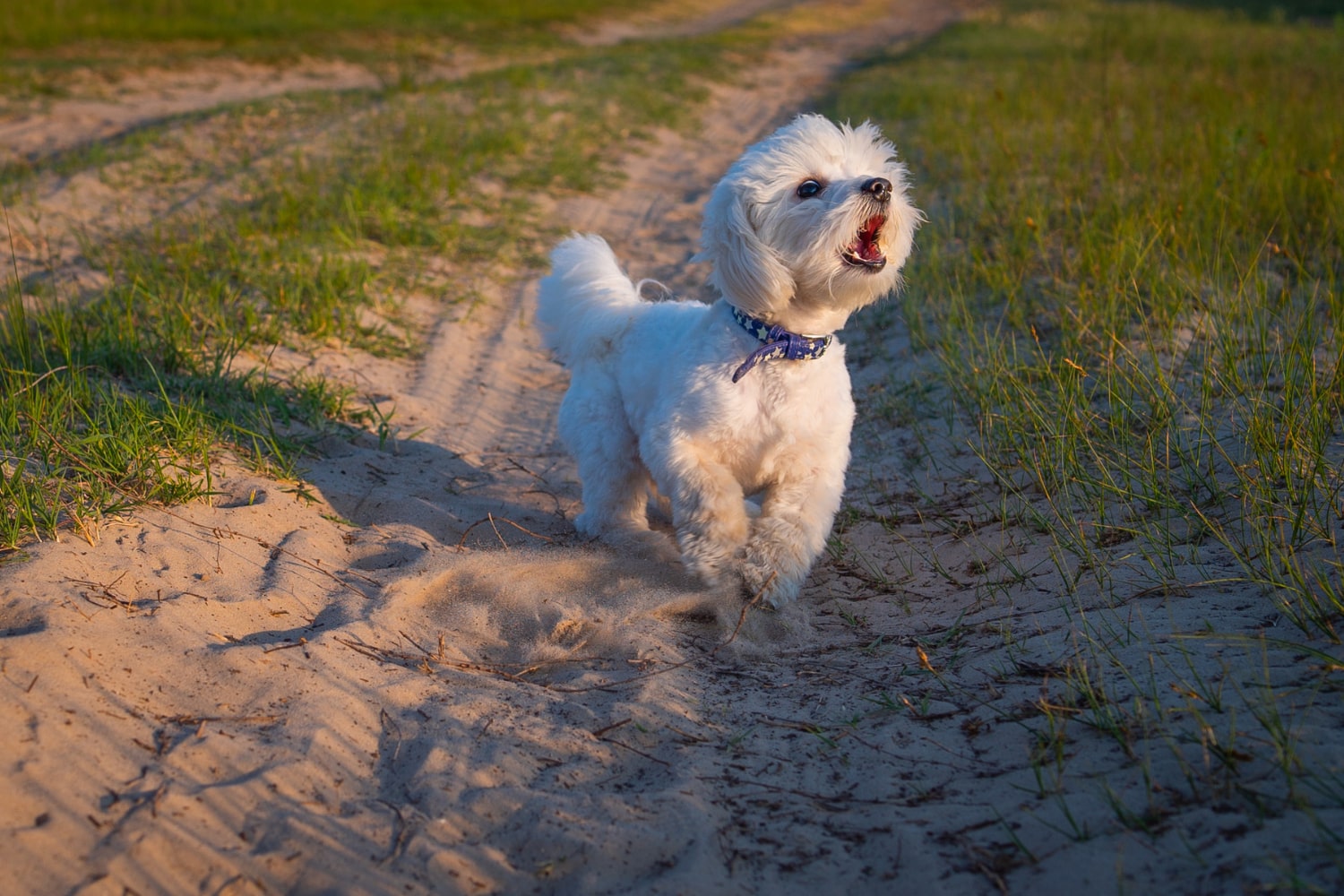
Friendly, excited barking during play, often low and growly but paired with loose, bouncy body language, play bows, and a relaxed tail, is simply part of some dogs' play style and isn't usually a problem to fix unless it escalates.
Barking from loneliness
Boredom or separation anxiety can trigger barking alongside chewing, digging, or pacing, in dogs of any breed or age. Reducing time spent alone, using dog walkers or daycare, and practising calm settling with a kong or bone away from you all help; more severe cases benefit from professional support.
Getting the right support
See also our guide on coping with fear and anxiety in dogs. Get in touch if barking is becoming a serious problem in your home. Learn more about our barking training programme and our sensory enrichment hub. Also see Recognising and Easing Anxiety Through Emotional Enrichment.
About Royvon
Enrichment Based Dog Boarding
Our calm, structured environment is built for dogs who need more than a standard kennel.
Dog BoardingLeading Dog Training
A structured residential dog training programme where your dog lives with our expert team, building calm behaviour, reliable obedience and real-world confidence that lasts beyond their stay.
Dog Training
Royvon News & Enrichment Advice
Recent Posts Regarding Enrichment

Book With Peace Of Mind Today - Limited Places Available


Specialist care, structured training, and enrichment-led boarding designed to help dogs feel calm, confident and understood. 30,000+ completed residential training programmes; 200,000+ dogs cared for in total, including boarding, since 1959.
Existing Customer?
Log In


© Copyright 2026 Royvon. All Rights Reserved.
Licensed by Merthyr Tydfil County Borough Council with the reference AB 0001. Licensed by Surrey County Council with the reference LN/201800796.
Social Media: