

Border Collie Training
Border Collies are bred to work all day. Without a job, they find their own: chasing cars, herding the children, fixating on shadows. Here's why it happens and how we turn it round.
We train Border Collies on residential programmes in Surrey and South Wales.
How residential training works
High energy
Very intelligent
Herding instinct
Sensitive
★★★★★
“He came back more focused and greatly improved with his car chasing issues.”
Jaqui W. · Google review67 years of expertise
Behaviour aware approach
Structured, proven method
3 months of owner support
Rated Excellent by owners
Breed profile
Border Collie at a glance
Energy level
Very high
Needs 2+ hours active daily, mental as much as physical.
Intelligence
Exceptional
Ranked #1 for obedience intelligence. Learns fast, good and bad habits.
Trainability
Excellent
Highly responsive to training built on rewards. Needs consistent structure.
Common issues
Reactivity
Herding, nipping, obsessive behaviour, overarousal and anxiety when understimulated.
Understanding the breed
What makes a Border Collie different to train
Read more about how much exercise Border Collies need, why Border Collies are so smart and Border Collie mental stimulation.
Their herding instinct applies to children, cars, bicycles and other dogs, not just sheep.
They can learn a bad habit in a single session and need consistent handling to unlearn it.
Overarousal and obsessive behaviour are common when they lack mental stimulation.
They are sensitive dogs. Approaches built on force make things significantly worse.
Border Collies are not difficult dogs. They are demanding dogs. They need work, structure andan owner who can stay a step ahead.
What we help with
The challenges that come with a Border Collie
We work with these regularly. There is usually a clear path forward, even in cases that have been going on for years.
Obsessive behaviour
Shadow chasing, light fixation and ball obsession are expressions of an understimulated working brain. We address the root, not just the symptom.
Reactivity and overarousal
High reactivity to dogs, bikes, runners or sudden movement. Common in the breed and very treatable with structured exposure work.
Herding people or animals
Nipping heels, circling children, fixating on other pets. A natural instinct that needs redirecting, not suppressing.
Anxiety and hypersensitivity
Sound sensitivity, separation anxiety and generalised nervousness. Often triggered by a lack of routine or inconsistent handling.
Poor recall
A Collie in full focus mode cannot hear you. We build interrupt cues and reliable recall, even when your dog is highly aroused.
Aggression
Aggression rooted in fear or frustration. Typically responds very well to structured residential work once trust is established.
Residential training
How residential training helps a Border Collie
A bored Collie invents its own jobs. A residential stay gives them a proper one, every day: training, play and enrichment, with a trainer who keeps every routine the same.
We assess first
We start by finding out what is behind the behaviour. Obsessive habits, herding and anxiety can look alike, but each needs a different plan.
A job for that brain, every day
An hour of one to one training a day with the same trainer, plus play and enrichment. We build focus in our grounds first, then move on to busier places.
Handover and follow up
Collies learn bad habits as fast as good ones. So when you collect your dog, we teach you the same cues, then back you up with at least two follow up sessions.
From £85 a day in South Wales and £140 a day in Surrey. The final price depends on the time of year and your dog's programme.
Owner reviews
What Border Collie owners say
In their own words, taken from our Google reviews. Each one links to the listing it was left on.
★★★★★
“He has grown in confidence & started to enjoy situations where he was previously extremely anxious & reactive.”
★★★★★
“We could see a marked change in his behaviour around cars and he was at a stage where we could actually walk around traffic.”
★★★★★
“Our Border Collie, Coby, often would chase cars, wildlife, etc. With her guidance, Coby is a lot better.”
Success stories
Border Collie success stories
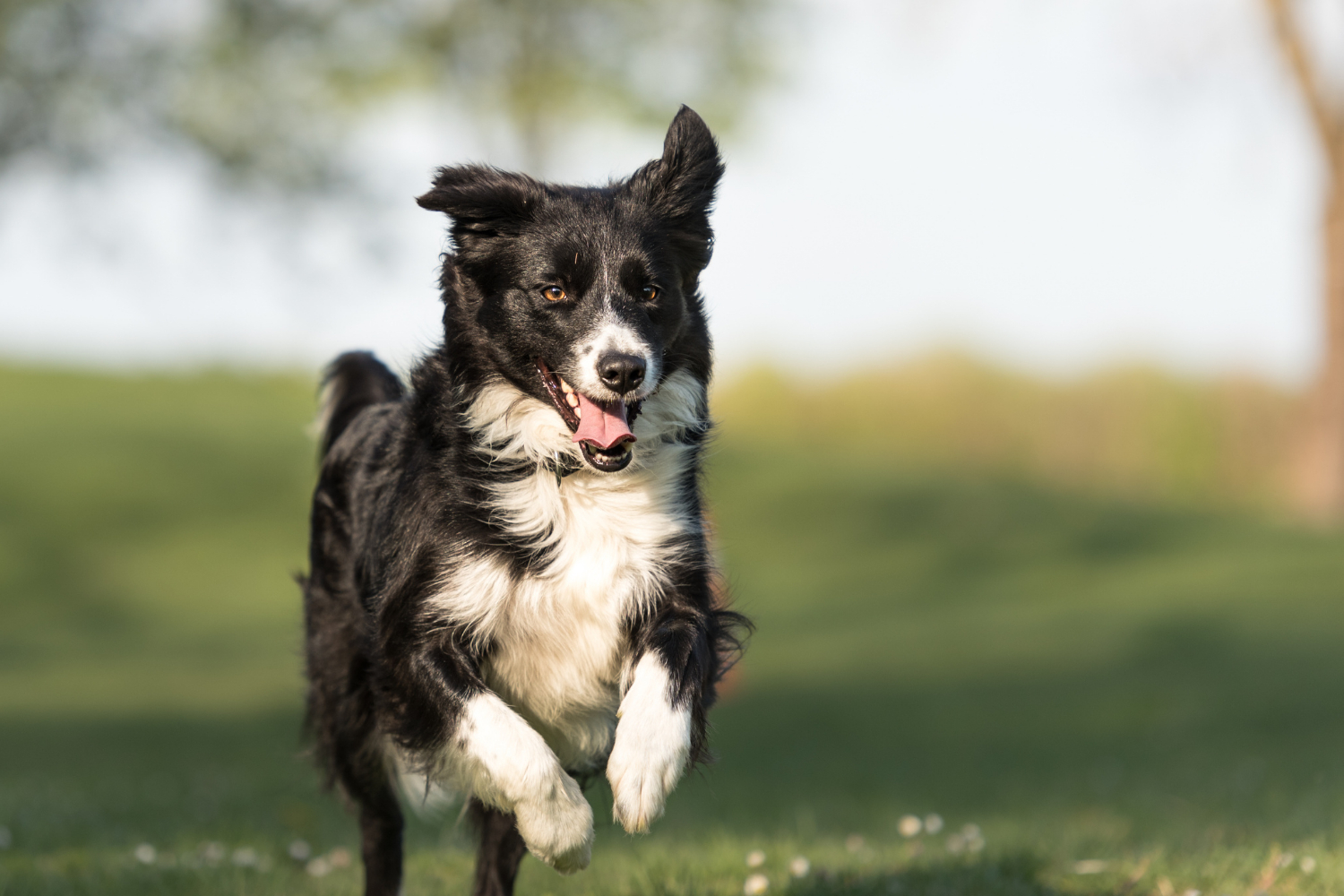
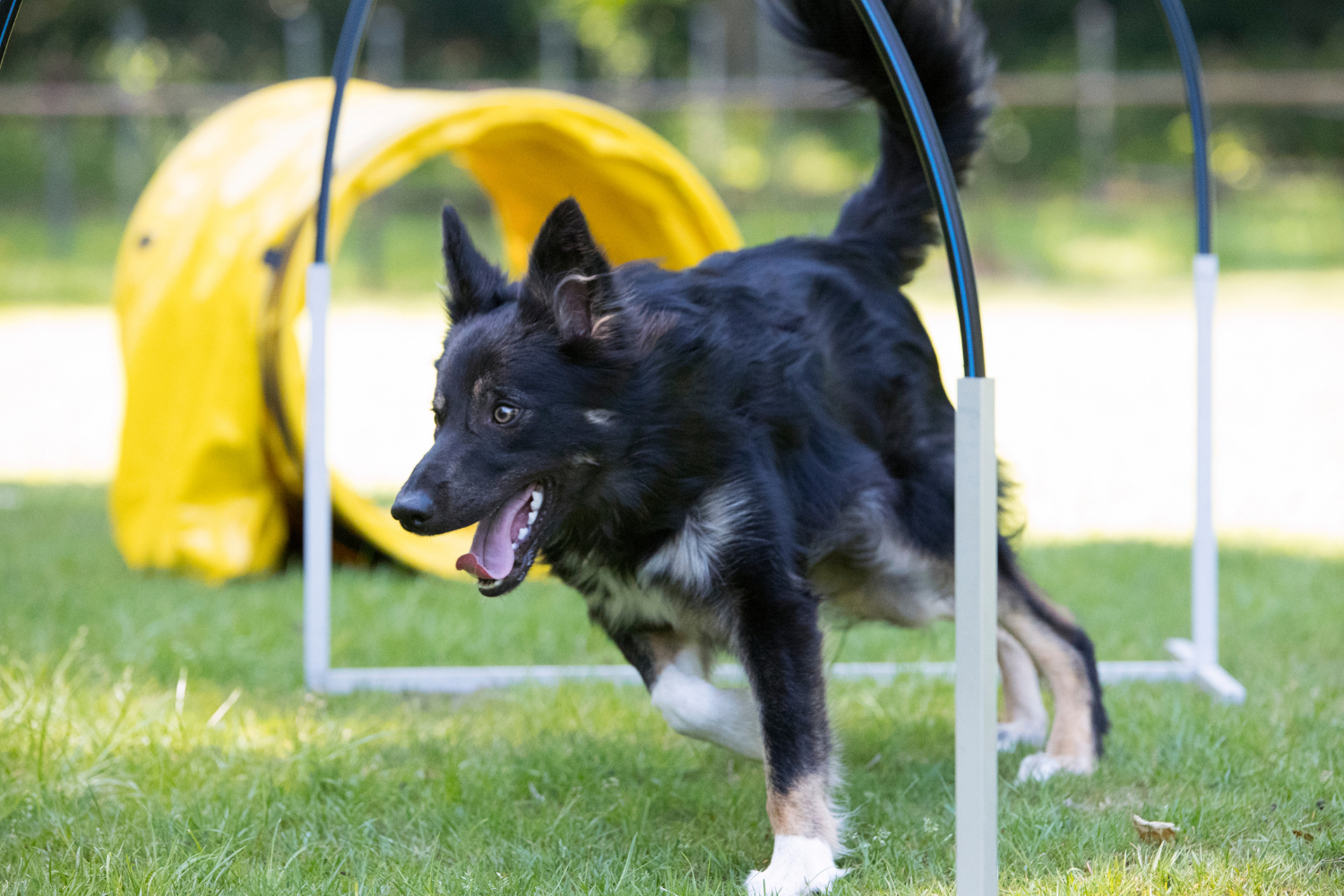
Real Royvon dogs, filmed during and after their training.
FAQs
Border Collie common questions
What owners usually ask before getting in touch.
Ask the team directlyAre Border Collies easy to train?
Yes and no. They learn faster than almost any breed, often in fewer than five repetitions, but they pick up bad habits just as quickly. They need consistent training built on rewards, and as much mental work as physical exercise. That is also why they do well in a structured residential programme, as long as the approach matches their sensitivity and energy.
How much exercise does a Border Collie need?
At least two hours of activity a day, and the mental work matters as much as the walking. Training games, scent work and puzzle feeders tire a Collie out in a way that running alone doesn't. Read more in our guides to how much exercise Border Collies need and Border Collie mental stimulation.
My Border Collie has obsessive behaviours. Can you help?
Usually yes. Shadow chasing and ball obsession are expressions of understimulation. We address root causes, not just symptoms.
Will boarding be stressful for my Border Collie?
Our structured, calm environment is designed to help sensitive dogs settle. Consistent routines and experienced handlers make the difference. See how our dog boarding works.
How long does training typically take?
Most programmes run two to three weeks. Because they learn quickly, progress is often visible within days.
Do you use force free methods?
Always. Border Collies respond very poorly to aversive methods. All Royvon training is based on positive reinforcement.
Ready to start
Let's talk about your Border Collie
Tell us about your dog and what you're struggling with. We'll guide you honestly on whether Royvon is the right fit, and what the best approach looks like.
Get in touchWe respond to every enquiry.
Book With Peace Of Mind Today - Limited Places Available


Specialist care, structured training, and enrichment-led boarding designed to help dogs feel calm, confident and understood. 30,000+ completed residential training programmes; 200,000+ dogs cared for in total, including boarding, since 1959.
Existing Customer?
Log In


© Copyright 2026 Royvon. All Rights Reserved.
Licensed by Merthyr Tydfil County Borough Council with the reference AB 0001. Licensed by Surrey County Council with the reference LN/201800796.
Social Media: