

Life With Dogs
Top 3 Dog-Friendly Holiday Destinations in the UK
👤
Author: Darren James
🕐
3 min read
📅
2019-09-09
Why book a dog holiday
Dogs experience the world largely through scent, and the same daily route inevitably becomes less engaging over time. Taking your dog to a new area gives them genuinely new smells, sights and dogs to meet, alongside walks and beaches that are just as good for you. A change of location is one of the simplest forms of enrichment there is, no equipment or training needed, just somewhere new to explore. As Royvon trainer Darren James puts it, the destinations worth the drive are the ones with proper off-lead space nearby, not just a strip of pavement between the car park and a beer garden. If a full holiday is not on the cards right now, our guide on deciding what to do with your dog while you're away covers the alternatives, and if your dog needs somewhere to stay instead, our boarding programme is worth a look.
Cornwall
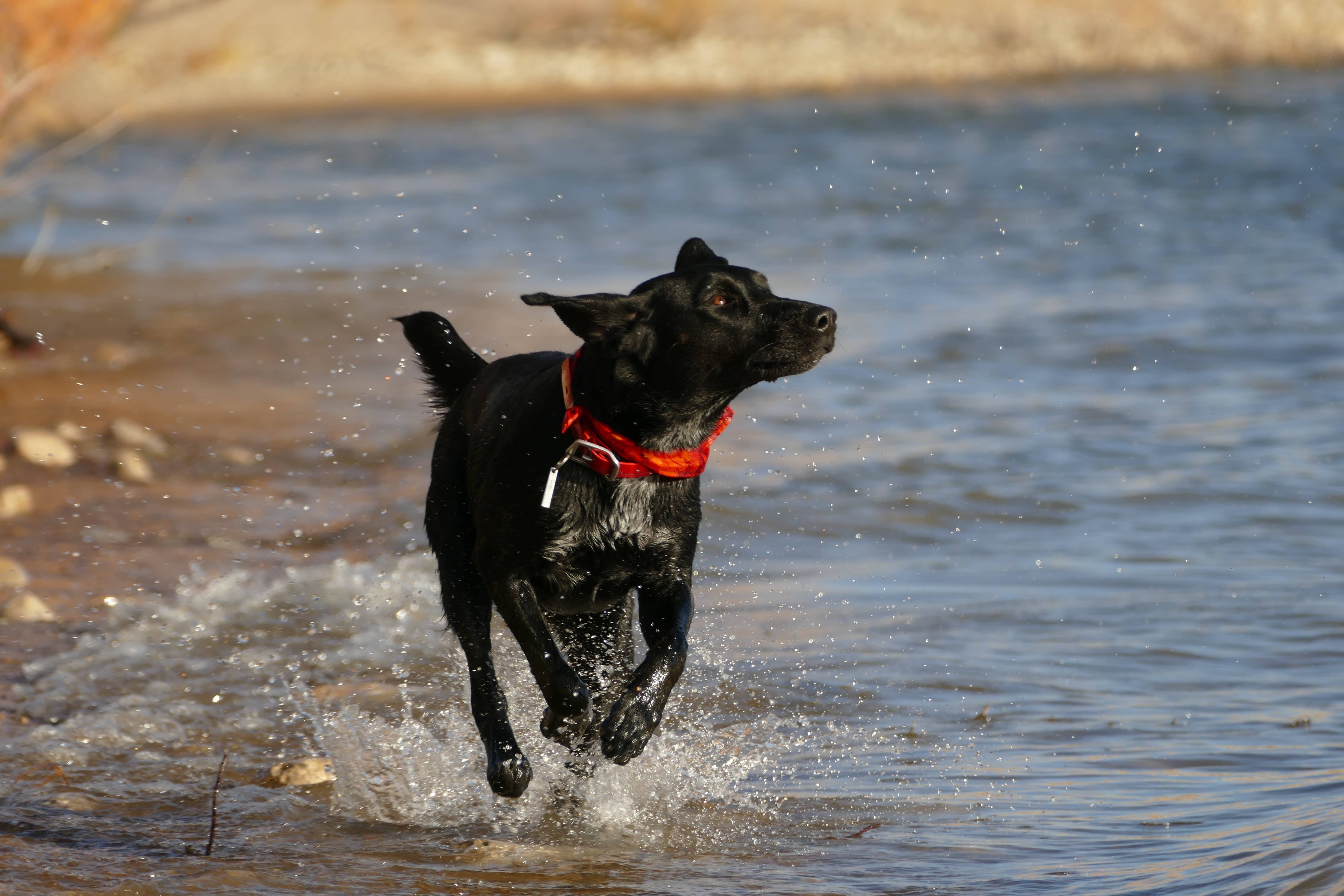
A mix of coastal and inland routes, including popular spots like Whitsand Bay and Port Isaac, with plenty of dog-friendly B&Bs, hotels, pubs and restaurants to choose from, and reliably good summer weather for a dip in the sea. Constantine Bay and Polzeath are both worth adding to the list too, wide enough at low tide for a proper off-lead run, and the South West Coast Path gives you miles of clifftop walking if your dog prefers solid ground to sand.
Two things worth knowing before you set off. Cornish tides move fast, and it is easy to misjudge how quickly a beach can be cut off, check tide times for the specific beach rather than assuming. Adders are also present on some of the coastal heathland in warmer months, uncommon to encounter but worth keeping dogs on the path rather than pushing through gorse and long grass if you are walking somewhere new. Many Cornish beaches also bring in seasonal dog restrictions between Easter and the start of October, so it is worth checking the local council's website for the specific beach you have in mind before you set off.
The Lake District
English heritage sites, forests and lakes, including Lake Windermere, with dog-friendly walking routes available from local tourist offices covering fields, forest and lakeside paths, plus dog-friendly pubs and hotels throughout the area. Catbells, above Derwentwater, is a good first fell for a dog that has not walked in hill country before, short, well-defined and not excessively steep, while the lakeside path around Derwentwater itself suits an older dog or one still building fitness.
Many National Trust sites in the area welcome dogs on the lead, and the Windermere steamer cruises have historically allowed dogs aboard too, though it is always worth confirming current policy before you book, since rules like this can change. Much of the Lake District is working farmland, so the Countryside Code applies, dogs on leads around livestock, and off the lead only where you are confident you have full control, since a dog worrying sheep is both a welfare issue for the sheep and a legal one for the owner. Sheep worrying convictions do happen, and farmers are entitled to protect their flock, so this is worth taking seriously rather than treating as a formality.
The Yorkshire Dales
Waterfalls, castles and abbeys alongside varied walking routes of different lengths, with a good spread of dog-friendly pubs and hotels along the way. Aysgarth Falls and Hardraw Force, England's tallest single-drop waterfall above ground, are both popular dog walks with plenty of parking, and the ruined Bolton Abbey estate has miles of dog-friendly riverside paths. The Ingleton Waterfalls Trail is another good option if your dog enjoys a longer circular route with plenty to look at along the way, and for something less physically demanding, our guide to urban agility has ideas that translate well to a quiet village high street on a rest day.
The same livestock caution applies here as in the Lake District, most of the Dales is grazing land. If your dog likes to swim, it is also worth checking local advice before letting them into rivers or ponds in warmer months, since blue-green algae blooms can appear in still or slow-moving water and are toxic to dogs if swallowed, sometimes fatally so within hours of a dog drinking or swimming in affected water. As with any location guide, it is worth confirming current access rules and opening times before you travel, since these details can change.
Travelling safely with your dog
The journey matters as much as the destination. A dog should travel in a crash-tested harness or a secured crate rather than loose in the car, both for their safety and because an unrestrained dog is a genuine driving hazard in an accident. On longer drives, plan a stop roughly every two hours for water, a toilet break and a short leg stretch, and never leave a dog alone in a parked car, even briefly, even with the windows cracked, since car temperatures can climb dangerously fast even on a mild day. If you are travelling further than a day trip, it is also worth packing your dog's usual food rather than switching brands mid-holiday, an unfamiliar diet plus a new environment is a common combination for an upset stomach.
What to check before you book
A few things are worth confirming before you commit: how far the accommodation actually is from off-lead walking, a "dog-friendly" hotel in a town centre can still mean road walks only, whether the pub itself allows dogs inside or just in the beer garden, and whether there's shade and water along the route if you're travelling in summer. Older dogs and flat-faced breeds tend to do better with flatter, shorter routes and shaded stretches, while younger, energetic dogs get more out of the Lake District's hillier terrain. Booking sites that specialise in pet-friendly stays tend to be more reliable on this detail than a general search, since they usually list exactly what "dog-friendly" means for that specific property rather than leaving you to find out on arrival. For enrichment ideas to fill in the gaps between walks, our social enrichment hub has more on keeping a dog engaged in new environments.
About Royvon
Enrichment Based Dog Boarding
Our calm, structured environment is built for dogs who need more than a standard kennel.
Dog BoardingLeading Dog Training
A structured residential dog training programme where your dog lives with our expert team, building calm behaviour, reliable obedience and real-world confidence that lasts beyond their stay.
Dog Training
Royvon News & Enrichment Advice
Recent Posts Regarding Enrichment

Book With Peace Of Mind Today - Limited Places Available


Specialist care, structured training, and enrichment-led boarding designed to help dogs feel calm, confident and understood. 30,000+ completed residential training programmes; 200,000+ dogs cared for in total, including boarding, since 1959.
Existing Customer?
Log In


© Copyright 2026 Royvon. All Rights Reserved.
Licensed by Merthyr Tydfil County Borough Council with the reference AB 0001. Licensed by Surrey County Council with the reference LN/201800796.
Social Media: