

Dog Training
How Dogs Learn: The Science Behind Cognitive Enrichment
👤
Author: Darren James
🕐
3 min read
📅
2022-08-16
How dogs actually learn
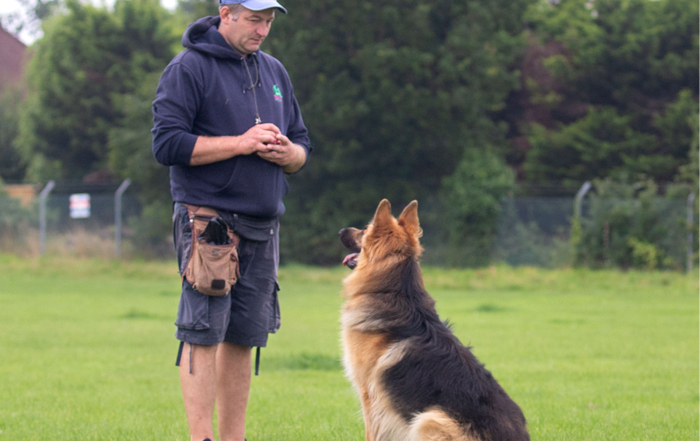
Rachel, one of our trainers at Royvon Esher, explores how dogs learn and how we put that understanding to work in training. Learning is a survival trait every species has developed, animals that learn fastest tend to thrive, and it's important not to expect dogs to learn the way humans do, since our episodic style of learning is quite different from theirs.
How humans learn, for comparison
Human learning is often broken into styles, visual, auditory, verbal, physical, logical, social and solitary, with each of us leaning toward one or two. A visual learner benefits from diagrams, an auditory learner from hearing information explained. Dogs, like humans, have their own preferred ways of learning too.
Classical conditioning
First described by Ivan Pavlov in 1897, classical conditioning links an event, place, person or object with a consequence that occurs alongside it. Pavlov's dogs learned to salivate at the sound of a bell because it was repeatedly paired with feeding, this is why your own dog might get excited the moment you open the cupboard where their food is kept, even before you've picked up the bowl.
Operant conditioning
Developed by B.F. Skinner in 1937 using rats choosing between two buttons, one delivering food, one delivering a shock, operant conditioning is the framework behind most dog training today. Skinner's experiment demonstrated both positive reinforcement (adding something good) and positive punishment (adding something aversive). There are four quadrants of operant conditioning in total; at Royvon we're force-free trainers, so we never use or recommend positive punishment.
Clicker training
Clicker training begins as classical conditioning, the click is paired with a reward, then becomes operant conditioning as the dog starts offering behaviours to earn that reward. It works across species and lets us mark the precise moment a behaviour we want to reinforce happens.
Shaping
Shaping builds a behaviour the dog can't yet perform by rewarding successive approximations toward the goal. We use it often with reactive dogs and for longer duration tasks, for example, rewarding a dog for staying quiet as another dog passes at ten metres, then five, then three, or building up from three steps in heel position to ten, then half a street. It's also a great way to build confidence in nervous dogs or teach over-excited dogs to settle, through small, achievable milestones.
Getting the right support
See also our guides on the basics of positive reinforcement and why dogs don't always listen. To book an assessment and discuss your dog's individual training needs, get in touch with our team. Learn more about our residential training programme and our cognitive enrichment hub. Also see Using Movement to Motivate Your Dog and Clicker Training: Marking the Behaviour You Want.
About Royvon
Enrichment Based Dog Boarding
Our calm, structured environment is built for dogs who need more than a standard kennel.
Dog BoardingLeading Dog Training
A structured residential dog training programme where your dog lives with our expert team, building calm behaviour, reliable obedience and real-world confidence that lasts beyond their stay.
Dog Training
Royvon News & Enrichment Advice
Recent Posts Regarding Enrichment
Book With Peace Of Mind Today - Limited Places Available


Specialist care, structured training, and enrichment-led boarding designed to help dogs feel calm, confident and understood. 30,000+ completed residential training programmes; 200,000+ dogs cared for in total, including boarding, since 1959.
Existing Customer?
Log In


© Copyright 2026 Royvon. All Rights Reserved.
Licensed by Merthyr Tydfil County Borough Council with the reference AB 0001. Licensed by Surrey County Council with the reference LN/201800796.
Social Media: