

Pillar 04 · Emotional Enrichment
Supporting Dogs' Emotional Needs When They Are Away From Home
Emotional enrichment is the foundation that allows every other form of enrichment to be effective. It shapes how secure dogs feel, how they cope with change, and how able they are to rest, learn, and engage with the world around them.
Emotion first
then engagement
Predictability
builds trust
Force-free
always
4.8★
600+ Google reviews
Internal experience, not just behaviour
What emotional enrichment really means for dogs.
Emotional enrichment is about supporting a dog's internal experience. It focuses on how dogs feel, not just what they do. This includes their sense of security, predictability, control, and emotional balance.
For dogs, emotional wellbeing is closely tied to their nervous system. When dogs feel emotionally steady, their bodies relax, behaviour becomes more flexible, and they are better able to cope with everyday demands. When emotional needs are unmet, dogs may appear restless, withdrawn, hyper-vigilant, or difficult to settle.
Emotional enrichment is not about preventing all stress. Some stress is unavoidable, especially when dogs are away from home. Instead, it buffers that stress with support, familiarity, and thoughtful handling so dogs can process change without becoming overwhelmed.
Away from home
Why emotional enrichment is crucial when dogs are away.
Being away from home places unique emotional pressure on dogs. Familiar scents, routines, people, and spaces are suddenly absent. Even confident dogs can find this disorienting.
When dogs enter boarding, daycare, or residential training environments, they are required to adapt quickly. Without emotional enrichment, this adjustment can lead to heightened arousal, anxiety, or shutdown behaviours often misinterpreted as behavioural issues rather than emotional responses.
Emotional enrichment in boarding provides:
Consistent routines that dogs can anticipate
Familiar sensory cues that provide comfort
Predictable human responses and clear communication
Space to settle rather than constant expectation to engage
Gradual trust-building rather than forced adaptation
Fulfilment grows when dogs feel settled enough to rest, explore, and engage not because they are distracted from stress, but because their emotional needs are genuinely met.
How emotional enrichment works
Three principles that shape our approach.
🧠
Emotional stability before engagement
A common misunderstanding in dog care is the belief that engagement creates emotional steadiness. In reality, emotional steadiness must come first.
Dogs who are emotionally overwhelmed may still participate in activities, but their nervous system remains in a heightened state. True emotional enrichment ensures dogs are settled before asking them to play, train, or socialise.
🎯
Choice, control, and predictability
Emotional enrichment relies heavily on choice and predictability. Dogs feel more secure when they can anticipate what will happen next and are not forced into situations they are not ready for.
Offering dogs the ability to opt in or out of activities, choose resting spaces, and communicate discomfort without consequence builds emotional resilience. Predictable routines, familiar handling styles, and consistent expectations help dogs settle more quickly.
🐾
Recognising emotional needs in different dogs
Not all dogs experience emotional challenges in the same way. Some seek reassurance through proximity to people. Others need space and time to observe before engaging.
Emotional enrichment respects these differences. Supporting emotional wellbeing means meeting dogs where they are, rather than where we expect them to be.
The outcome pillar
Emotional enrichment underpins everything.
Emotional enrichment does not exist in isolation. It underpins sensory, social, and play-based enrichment, shaping how dogs experience each of them.
A dog who feels emotionally settled can:
Sensory exploration without becoming overstimulated
Social engagement without pressure
Play without tipping into overwhelm
Learning in training without anxiety
When emotional needs are unmet, even well-intentioned enrichment can become stressful rather than supportive. This is why emotional enrichment is often described as the most important pillar it influences every other aspect of a dog's experience.
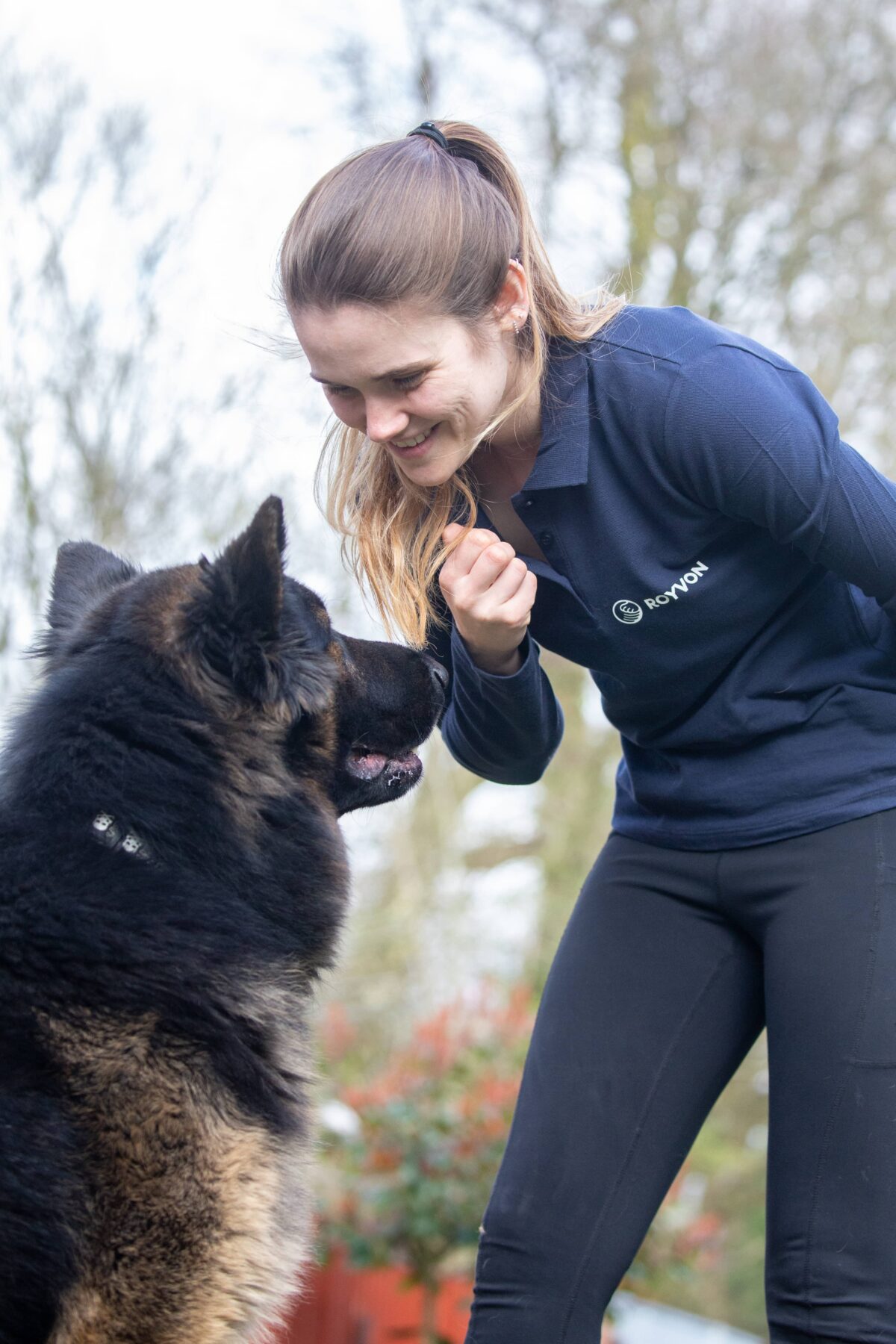
Fulfilment is not created through activity alone. It grows when dogs feel understood, supported, and secure enough to engage with the world at their own pace.
Emotional enrichment at Royvon
Observation, respect, and emotional support every day.
Our approach is built on experience, observation, and a deep respect for dogs as emotional beings. Emotional enrichment guides every decision we make.
👁
Continual observation
Our team continually observes how dogs are coping emotionally day by day and quietly adjusts support, pace, and expectations to reflect each dog's changing needs over time.
🤝
Consistent, respectful handling
Whether a dog is with us for training, boarding, or ongoing support, the focus remains on helping them feel settled, secure, and emotionally supported.
🏡
Built for home life
This approach helps dogs not only cope while away, but return home more confident, more resilient, and better able to share life comfortably with the people who care for them.
The Royvon Enrichment Framework
Emotional is one of four.
Sensory Enrichment
How calm experiences help dogs feel safe, settled, and fulfilled.
Explore this pillar →Social Enrichment
How safe dogs feel with others. Choice, consent and emotional safety.
Explore this pillar →Cognitive Enrichment
How dogs learn, think and feel capable. Confidence through understanding.
Explore this pillar →Enrichment-led training and boarding
Ready to see what your dog is capable of?
Tell us about your dog their quirks, their worries, what lights them up and we'll explain how emotional enrichment would work for them.
Book With Peace Of Mind Today - Limited Places Available


Specialist care, structured training, and enrichment-led boarding designed to help dogs feel calm, confident and understood. 30,000+ completed residential training programmes; 200,000+ dogs cared for in total, including boarding, since 1959.
Existing Customer?
Log In


© Copyright 2026 Royvon. All Rights Reserved.
Licensed by Merthyr Tydfil County Borough Council with the reference AB 0001. Licensed by Surrey County Council with the reference LN/201800796.
Social Media: