

Cocker Spaniel Training
Busy, sensitive and led by their nose. When that shows as vanishing on walks, pulling on the lead or nerves around other dogs, here’s how we train Cocker Spaniels, show and working types alike.
We run residential programmes for Cocker Spaniel owners in Surrey and South Wales.
How residential training works
High energy
Sensitive
Strong prey drive
People-oriented
★★★★★
“In just three weeks, Charlie has had a profound impact on my Working Cocker Spaniel, Sadie.”
Carolyn Y. · Google reviewWhat are you struggling with?
67 years of expertise
Behaviour aware approach
Structured, proven method
3 months of owner support
Rated Excellent by owners
Breed profile
Cocker Spaniel at a glance
Energy
High
Working Cocker Spaniels have very high energy and need substantial daily activity.
Temperament
Sensitive
Emotionally sensitive. Harsh methods cause significant setbacks.
Drive
High prey
Strong flushing and retrieving instinct. Scent-driven and easily distracted.
Common issues
Separation anxiety
Separation anxiety, sound sensitivity and over-excitement are the most common challenges.
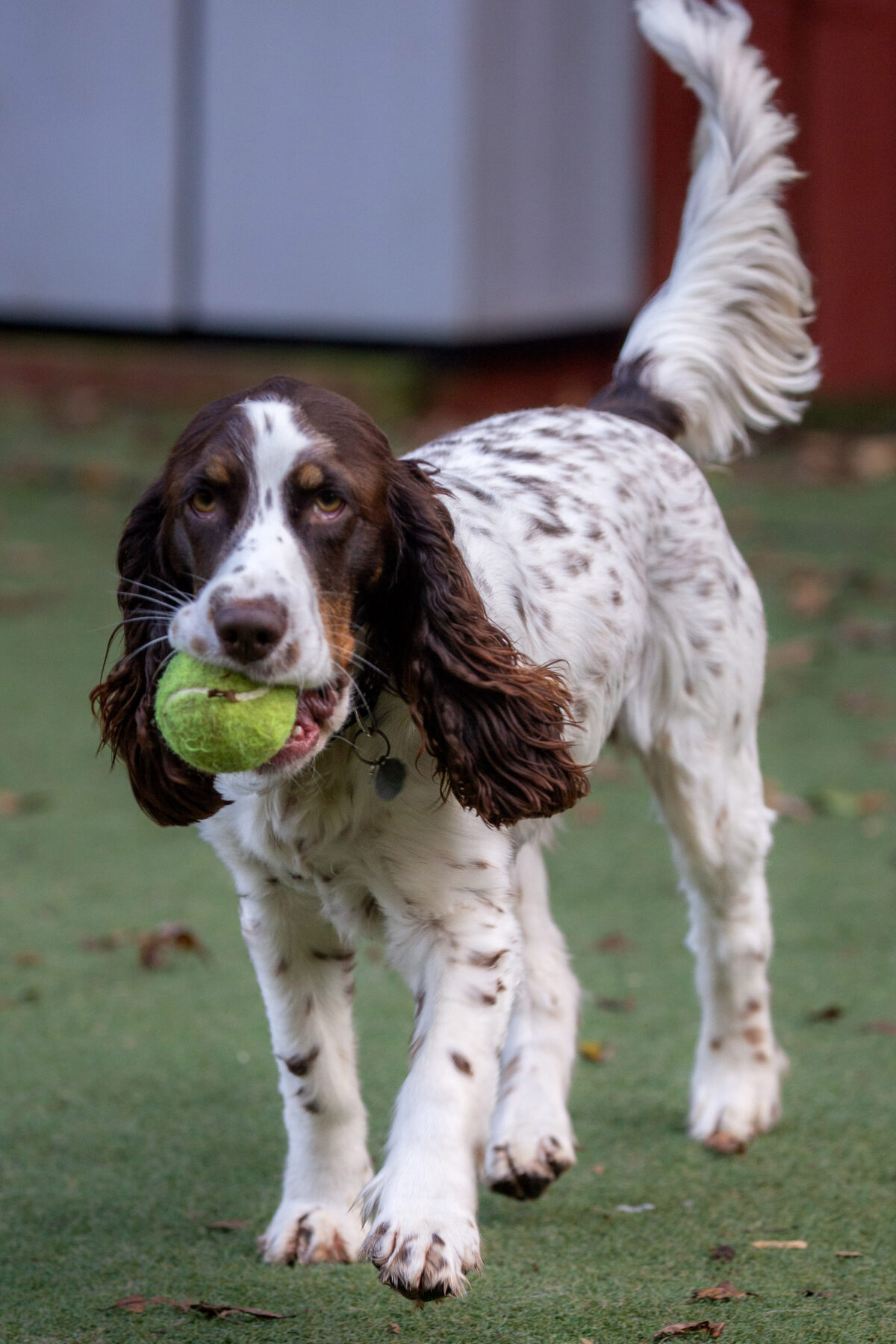
Understanding the breed
What makes a Cocker Spaniel different to train
Cocker Spaniels are among the most rewarding breeds to train and among the most sensitive. They respond beautifully to clear, gentle guidance and fall apart under pressure or inconsistency.
Their emotional sensitivity means they pick up on owner anxiety and stress, often mirroring it. Calm, consistent handling is essential.
Extraordinarily sensitive to tone and body language. Shouting or harsh corrections cause lasting setbacks
Separation anxiety is common and can be severe in a breed this bonded to its people
Working Cockers especially need substantial physical and mental exercise to remain calm
Over-excitement is common, they need to learn to settle rather than being constantly stimulated
A Cocker Spaniel wants to work with you. Give that nose and energy a job, keep your handlinggentle, and they shine.
What we help with
The challenges that come with a Cocker Spaniel
We work with these regularly. There is usually a clear path forward, even in cases that have been going on for years.
01
Separation Anxiety
One of the most common Cocker challenges. We build independence gradually and carefully.
02
Sound Sensitivity
Noise phobia and reactivity to sudden sounds. Structured desensitisation over time.
03
Over-Excitement
Cannot switch off. We build genuine calm through structure and enrichment.
04
Reactivity to Dogs
Can be fear-based or excitement-based. Structured work produces good results.
05
Poor Recall
A Cocker on a scent trail is difficult to interrupt. We build reliable recall in all environments.
06
Resource Guarding
Can occur in the breed. Addressed carefully with positive methods.
Residential training
How residential training helps a Cocker Spaniel
Cocker Spaniels do best with clear, gentle structure and plenty to think about. A residential stay gives your dog daily training that puts their drive to search and carry to good use without pressure.
We assess first
We find out whether the problem is excitement, worry or a nose that switches off their ears, since recall, reactivity and guarding each need a different plan.
Focus through the nose
An hour of one to one training a day with the same trainer. We use sniffing and retrieve games to build focus and recall in our grounds, then take it out into busier places.
Handover and follow up
Cockers are sensitive to how you handle them, so at handover we show you the exact cues and games we use, then back you up with at least two follow up sessions.
From £85 a day in South Wales and £140 a day in Surrey. The final price depends on the time of year and your dog's programme.
Owner reviews
What Cocker Spaniel owners say
In their own words, taken from our Google reviews. Each one links to the listing it was left on.
★★★★★
“She was having issues with reactivity and fear around other dogs but the training helped her (and us) massively.”
★★★★★
“…Romeo has really understood Angus and worked out what drives him and has been incredibly creative in trying different things to help Angus and us understand each other better.”
★★★★★
“…she was very aggressive when greeting dogs before but was able to join in group play in just a few weeks with her training.”
R
Success stories
Cocker Spaniel success stories
Real Royvon dogs, filmed during and after their training.

FAQs
Cocker Spaniel common questions
What owners usually ask before getting in touch.
Ask the team directlyIs residential training suitable for a Cocker Spaniel?
Yes, they respond exceptionally well when the approach is positive and consistent.
My Cocker has severe separation anxiety. Can residential training help?
Yes. Separation anxiety is one of our most common reasons for Cocker referrals.
Will boarding increase my Cocker's anxiety?
Our calm, structured environment and experienced handlers help them settle. We monitor closely.
How long does a Cocker Spaniel programme take?
Separation anxiety programmes typically run 3–4 weeks. Other issues may take 2–3 weeks.
Do you use force-free training?
Always. Cocker Spaniels are particularly sensitive and harsh methods cause significant lasting setbacks.
Ready to start
Let's talk about your Cocker Spaniel
Tell us about your dog and what you're struggling with. We'll guide you honestly on whether Royvon is the right fit, and what the best approach looks like.
Get in touchWe respond to every enquiry.
Book With Peace Of Mind Today - Limited Places Available


Specialist care, structured training, and enrichment-led boarding designed to help dogs feel calm, confident and understood. 30,000+ completed residential training programmes; 200,000+ dogs cared for in total, including boarding, since 1959.
Existing Customer?
Log In


© Copyright 2026 Royvon. All Rights Reserved.
Licensed by Merthyr Tydfil County Borough Council with the reference AB 0001. Licensed by Surrey County Council with the reference LN/201800796.
Social Media: