

Cavalier King Charles Spaniel Training
Soft, sweet and never far from your side. When that turns into panic when you leave, chasing birds on walks or jumping up at everyone, here’s why it happens and how our Cavalier training helps.
We run residential programmes for Cavalier King Charles Spaniel owners in Surrey and South Wales.
How residential training works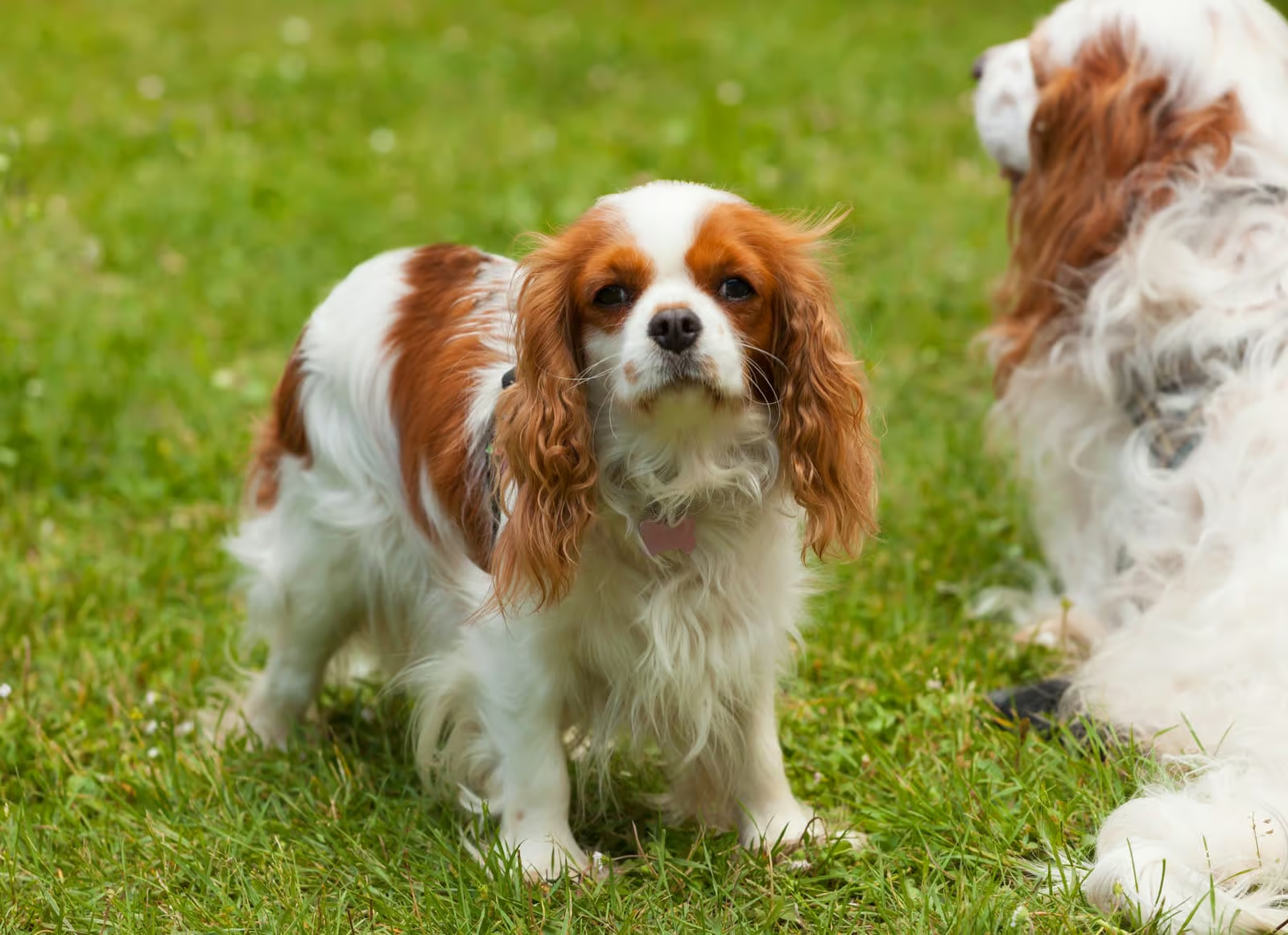
What are you struggling with?
67 years of expertise
Behaviour aware approach
Structured, proven method
3 months of owner support
Rated Excellent by owners
Breed profile
Cavalier King Charles Spaniel at a glance
Drive
Moderate
A spaniel at heart, so they enjoy a good sniff and a chase, then a long cuddle.
Temperament
Gentle
Friendly with almost everyone, people and dogs alike.
Trainability
High
Keen to please and food motivated, so they learn quickly with rewards.
Common issues
Separation stress
The most common problems are separation stress, recall, pulling and jumping up.
Understanding the breed
What makes a Cavalier King Charles Spaniel different to train
Cavaliers are named after King Charles II, who was rarely seen without his toy spaniels. They’ve been bred as companions for centuries, and most would happily follow you from room to room all day. The spaniel side is still there too, so birds and scents on a walk can be hard to resist.
Their love of company means time alone has to be taught, not assumed
The spaniel nose can override recall when there’s a good scent
Gentle and sensitive, they switch off if training feels harsh
Being small and sweet, jumping up often gets rewarded without anyone meaning to
A Cavalier that’s relaxed on its own is a gentle, happy companion for the whole family.
What we help with
The challenges that come with a Cavalier King Charles Spaniel
We work with these regularly. There is usually a clear path forward, even in cases that have been going on for years.
01
Separation stress
Whining, barking or scratching at the door the moment you leave. We increase time apart in small, easy steps.
02
Poor recall
Nose down and following a scent, or off after a pigeon. Recall gets practised around real distractions.
03
Pulling on the lead
Keen to get everywhere first. Walking on a loose lead earns the rewards.
04
Jumping up
Paws on everyone’s knees. A calm sit becomes the way to get attention.
05
Chasing birds
Pigeons and ducks are hard to ignore. We build impulse control a little at a time.
06
Barking
At the door or when they want your attention. Your dog learns to settle quietly instead.
Residential training
How residential training helps a Cavalier King Charles Spaniel
Most Cavalier problems come from loving their people a little too much. A residential stay gives your dog a calm routine with one trainer, plus daily practice at settling without you nearby.
We assess first
We look at how your Cavalier copes alone, on walks and with visitors, so we know where the plan needs to begin.
Independence and recall
An hour of one to one training a day with the same trainer. We build calm and recall in our grounds first, then practise in busier places.
Handover and follow up
At handover, we show you the routine and cues we use, so your Cavalier keeps progressing at home, with at least two follow up sessions afterwards.
From £85 a day in South Wales and £140 a day in Surrey. The final price depends on the time of year and your dog's programme.
Owner reviews
What Cavalier King Charles Spaniel owners say
In their own words, taken from our Google reviews. Each one links to the listing it was left on.
Success stories
Cavalier King Charles Spaniel success stories
Real Royvon dogs, filmed during and after their training.
FAQs
Cavalier King Charles Spaniel common questions
What owners usually ask before getting in touch.
Ask the team directlyAre Cavaliers easy to train?
Yes. They’re eager to please and food motivated, so they pick things up quickly.
Is residential training suitable for a Cavalier?
Yes. We go at your dog’s pace in a calm routine, and we assess every dog before booking anything.
My Cavalier cries whenever I leave. Can you help?
Yes. We build independence gradually and show you how to carry it on at home.
How long does a Cavalier programme take?
Most residential programmes run 2 to 3 weeks. We confirm the length after the assessment.
Do you use force free training?
Yes. Cavaliers are sensitive and respond best to rewards and praise.
Ready to start
Let's talk about your Cavalier King Charles Spaniel
Tell us about your dog and what you're struggling with. We'll guide you honestly on whether Royvon is the right fit, and what the best approach looks like.
Get in touchWe respond to every enquiry.
Book With Peace Of Mind Today - Limited Places Available


Specialist care, structured training, and enrichment-led boarding designed to help dogs feel calm, confident and understood. 30,000+ completed residential training programmes; 200,000+ dogs cared for in total, including boarding, since 1959.
Existing Customer?
Log In


© Copyright 2026 Royvon. All Rights Reserved.
Licensed by Merthyr Tydfil County Borough Council with the reference AB 0001. Licensed by Surrey County Council with the reference LN/201800796.
Social Media: