

Training for Reactive Dogs
Living with a reactive dog can be exhausting. A simple walk becomes a scanning exercise. At Royvon, we help reactive dogs make calmer choices through positive, structured, behaviour-aware training.
Force-free methods · 65+ years expertise · Wales & Surrey · Rated Excellent
4.9 ★
400+ verified reviews
🏅
Over 60 years of expertise
🧠
Behaviour-aware approach
📋
Structured, proven method
🤝
3-month owner support included
⭐
Rated Excellent by owners
Is your dog reactive?
Reactivity is not aggression it’s usually fear.
Reactive dogs are not necessarily bad dogs. In many cases they are frightened, frustrated, overwhelmed, overexcited or simply unsure what else to do.
At Royvon, we help reactive dogs make calmer choices by understanding what’s driving the behaviour first. Not just what your dog is doing but why.
Book an assessmentYour dog may need support if they:
Bark or lunge at other dogs
Growl or snap at triggers
Fixate on people, bikes or vehicles
Pull hard towards or away from things
Pace or whine before walks
Raise hackles and go stiff
Struggle to settle after seeing a trigger
React to noises, runners or children
“The behaviour may look loud or dramatic but underneath there’s always a reason.”
Our job is to understand that reason and build a plan your dog can actually cope with.
What we help with
The Challenges That Come With Reactivity
We work with these regularly. There is usually a clear path forward — even in cases that have been going on for years.
🐕
Dog-to-dog reactivity
Barking, lunging, staring or growling at other dogs on walks or at a distance.
🚶
Reactivity to people
Reactions to strangers, joggers, children, cyclists or visitors arriving at the door.
🚗
Traffic and movement
Cars, bikes, scooters, skateboards, fast movement or sudden visual triggers.
🔊
Noise reactivity
Doorbells, street noise, building work, barking, fireworks or household sounds.
😬
Lead frustration
Dogs who desperately want to reach another dog or person but can’t, creating explosive reactions.
😱
Fear-based reactions
Dogs whose reactivity is rooted in anxiety creating distance through big behaviour.
Our approach
Positive, structured training at your dog’s pace.
We don’t throw reactive dogs into stressful situations and hope they get used to it. That approach can make things worse. Instead, we create a safer learning environment where your dog can begin to think, listen and respond.
Our reactivity training focuses on understanding triggers, building calm engagement, teaching clear marker cues, rewarding calmer choices and creating safe distance from triggers.
We never use aversive or punishment-based methods. Punishment can suppress warning signals while leaving the underlying fear intact — which can actually increase risk over time.
“For reactive dogs, positive reinforcement isn’t just kinder.”
It’s more effective because fear and stress are often part of the problem.
What we don’t do
✕
Flood or overwhelm your dog near triggers
✕
Use corrections to suppress reactions
✕
Skip the assessment and go straight to exposure
✕
Promise overnight results
What we do
→
Work at a level your dog can cope with
→
Identify the specific trigger and emotion behind it
→
Reward calm looking, disengaging and checking in
→
Coach you to continue progress on daily walks
→
Adjust pace to your dog’s confidence, not a fixed schedule
How it works
How reactive dog training works
A clear process not guesswork.
01
Understand the trigger
We identify what your dog reacts to, how close they can cope, and what their body language tells us before the reaction happens.
02
Build calm focus
Your dog learns to engage with the trainer or owner before the situation becomes too much.
03
Create safe distance
We work at a level where your dog can still think, respond and take rewards.
04
Reward better choices
Calm looking, turning away, checking in, walking past all of these are reinforced consistently.
05
Gradually increase difficulty
As confidence grows, we carefully adjust distance, movement, environment and distractions.
06
Transfer the training to you
You receive practical guidance so progress continues outside Royvon on real walks, in real life.
⭐ Featured story
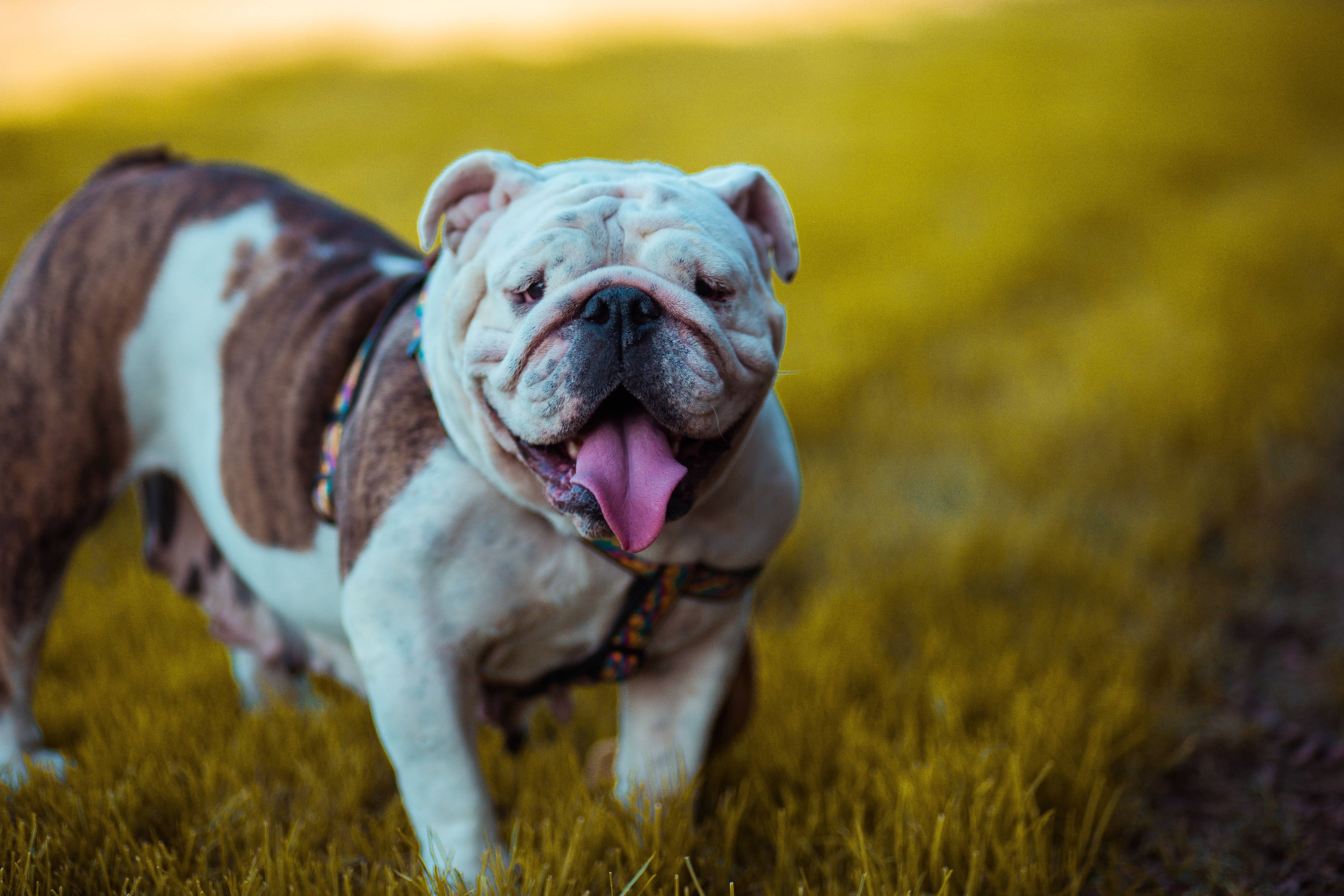
French Bulldog
Bandit the French Bulldog
This young excitable French Bulldog is always busy scanning around with eyes peeled and ears perked up, always on the alert. He is anxious and hyper-vigilant and when anything unfamiliar comes into view, especially a dog, he would instantly freeze and within seconds a frenzied, out-of-control barking and lunging would follow. His behaviour is sometimes a result of anxiety or fear, sometimes frustration and over-excitement and usually both. This is very stressful and upsetting for Bandit and also for his loving family. His pet-parents enrolled him in Royvon's Behaviour Modification Programme to work on his aggressive (and by aggressive we really mean reactive and over-excited behaviour towards other dogs. With the help of trainer Aleksandra Borawska in Royvon Merthyr, Bandit is learning that other dogs are nothing to stress about as well as working on his self control and confidence. With his training, Bandit is now on his way to good behaviour. If your dog shows similar behaviours to Bandit's, get the help you need from our experts. With our professional trainers, Royvon Dog Hotels and Training has helped thousands of dogs and pet-parents in the United Kingdom since 1959.
Owner reviews
What dog owners say
Real stories from owners of reactive dogs.
★★★★★
“I did a six-week reactive dog course with Romeo for my anxious Jackapoo, Alfie, and saw real progress. Their reward-based training and calm, patient approach made a big difference for both of us.”
RH
Rachel H.
Owner of Alfie, Jackapoo
★★★★★
“Romeo helped my reactive rescue dog become much more confident when walking on the street and less reactive to car and street noises, bicycles and particularly dogs.”
JM
James M.
Owner of rescue Staffie mix
★★★★★
“Romeo brought out a gentle German Shepherd so we could practise with Guinness near children playing football and other calm dogs, all from a safe distance. We learnt so much just from the assessment.”
GP
Gina P.
Owner of Guinness, Labrador
4.9
★★★★★
Average from 400+ verified reviews
Is my dog reactive or aggressive?
›
Reactivity and aggression can overlap, but they are not always the same. Many reactive dogs bark, lunge or growl because they are fearful, frustrated or overwhelmed. An assessment can help clarify what is driving the behaviour.
Can reactive dogs really improve?
›
Will my dog be forced to meet other dogs?
›
Do you use punishment-based methods?
›
Is residential training suitable for reactive dogs?
›
Do you offer reactive dog training in Wales and Surrey?
›
Ready to start
Let’s help your dog feel calmer
Tell us about your dog and what’s been happening on walks. We’ll guide you honestly on whether Royvon is the right fit and what the best approach looks like.
Or email [email protected] we respond to every enquiry.
65+
years caring for dogs
400+
verified 5-star reviews
6
behaviour programmes
2
locations — Wales & Surrey
Book With Peace Of Mind Today - Limited Places Available


Specialist care, structured training, and enrichment-led boarding designed to help dogs feel calm, confident and understood. 30,000+ completed residential training programmes; 200,000+ dogs cared for in total, including boarding, since 1959.
Existing Customer?
Log In


© Copyright 2026 Royvon. All Rights Reserved.
Licensed by Merthyr Tydfil County Borough Council with the reference AB 0001. Licensed by Surrey County Council with the reference LN/201800796.
Social Media: